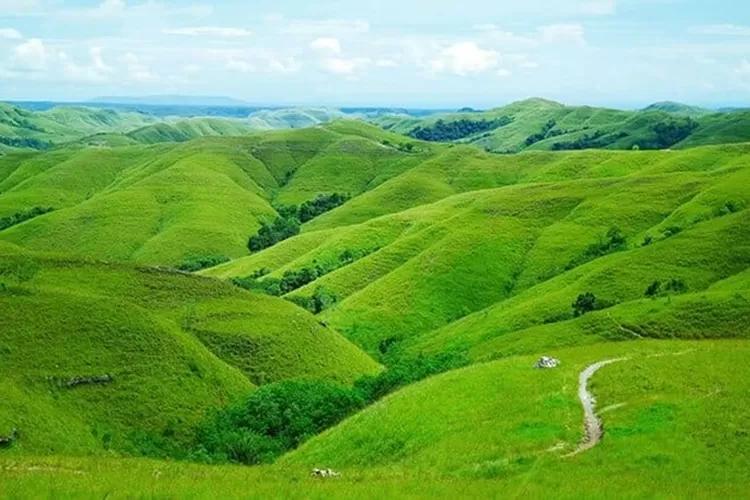
Bukit Teletubbies Luwuk: Rolling Green Hills Above Banggai
Bukit Teletubbies Luwuk is not a theme park, a resort, or a managed tourist attraction. It is a landscape of rolling, grass-covered hills in Desa Lumpoknyo, Bungin, Kecamatan Luwuk, Kabupaten Banggai, Central Sulawesi, roughly 12 kilometers north of Luwuk city center. The name is a local nickname, given because the undulating contours resemble the hills in the Teletubbies television series.
The hills began as abandoned farmland. When the original plantations were no longer maintained, the land returned to natural grassland. Local residents now use the area to graze cattle and goats, and livestock wandering across the slopes is part of the site’s character.
The Landscape: Rolling Hills and Open Sky
Bukit Teletubbies consists of low, rounded hills covered in grass. Most of the slopes have very few trees, creating an open horizon. A single tree stands alone on one ridge and is known locally as Pohon Jomblo, or the “Bachelor Tree”. It has become a recognizable photo subject.
During the rainy season, the grass turns deep green. In the dry season, the hills fade to brown and tan, giving the landscape a different character. From higher points, parts of Luwuk and the coastline can be seen in the distance. On clear mornings, thin mist sometimes settles in the valleys.
The terrain is not dramatic. There are no cliffs, waterfalls or water features. Its appeal is simplicity: grass, sky, wind and open space.
The Road to Bukit Teletubbies
Access is the main practical challenge. The road from Luwuk to Desa Lumpoknyo is paved for much of the way, but the final section toward the hills can be unpaved, rocky and narrow. After rain, the surface can become slippery and difficult for both motorbikes and cars.
Travel times vary. Some sources describe 20–30 minutes from central Luwuk, while other travelers report 45 minutes to 1 hour. The difference can reflect different starting points, vehicles and road conditions. Allow extra time and use a vehicle in good condition.
Motorbikes are commonly used, but a car with decent ground clearance is more comfortable on rough sections. There is no public transportation directly to the hills. A rented scooter or private/rental car is the usual option.
What to Do at Bukit Teletubbies
Photography is the main activity. The rolling hills, solitary tree and grazing cattle provide simple but effective compositions. The area is also used for pre-wedding photography and drone photography.
Walking across the hills is easy and does not require a marked trail. Visitors can wander across the open slopes and enjoy the scenery at their own pace. Grass can become tall during the wet season, so suitable footwear is useful.
Picnicking is common. There are no designated picnic areas, but visitors can bring a mat and enjoy the open air. Some local information mentions small warungs near the parking area selling snacks and drinks, but this is not guaranteed.
Camping is allowed and is popular, particularly among younger visitors. On clear nights, the low level of nearby artificial light makes the hills suitable for stargazing.
Camping and Overnight Visits
Bukit Teletubbies is not a formal campground. There are no designated pitches, toilets, showers or electricity. Campers need to bring their own tent, sleeping bag, food, drinking water and other supplies.
The main reasons to camp are the night sky and sunrise. On clear nights, stars can be visible because there are few nearby city lights. In the morning, sunlight spreads across the grass with soft, golden light.
The hills are open and exposed to wind, and temperatures can fall at night. Campfires should not be built carelessly. Dry grass during the dry season creates a fire risk, and there have been reports of burned patches on the hills.
Best Time to Visit Bukit Teletubbies
The best time of day is early morning or late afternoon. At sunrise, the light is soft, mist may linger in the valleys and temperatures are cooler. At sunset, the hills take on the golden light favored by photographers.
The best season depends on what you want to see. The rainy season, roughly November to March, produces greener grass and a more vivid landscape, but the access road is harder. The dry season, roughly June to September, generally offers firmer roads and clearer skies, but the hills become brown rather than green. The transition months can provide a compromise.
What to Bring and What Not to Expect
Bring:
- Drinking water and food; there are no reliable food stalls on the hill
- Sturdy shoes or sneakers for uneven grassy terrain
- Hat, sunscreen and sunglasses because there is little shade
- A jacket or windbreaker for early morning and evening
- Camera or drone if you plan to photograph
- Camping equipment if you plan to stay overnight
Do not expect:
- Toilets, showers or washing facilities
- Food and drink vendors on the hill itself
- Signage or marked trails
- Reliable mobile signal in every area
- Formal ticketing or tourist management
FAQ
Is Bukit Teletubbies Luwuk suitable for families with children?
Yes, with preparation. The terrain is open and walking is relatively easy, but there are no facilities or shade, and the road can be rough. Bring water, snacks and sun protection. Avoid visiting after heavy rain when the road is slippery.
Do I need a 4WD vehicle?
Not necessarily. A vehicle with decent ground clearance is recommended. Motorbikes are commonly used, but unpaved sections require care, especially when wet. A standard car can reach the area in dry weather if driven slowly.
Can I camp overnight?
Yes. Camping is common, but there are no facilities. Bring your own tent, water, food and all necessary supplies. Because the area is open, wind protection is useful.
Is there an entrance fee?
No official entrance fee is documented. The site is informally used rather than managed as a ticketed attraction. If local fees are collected at a particular time, they may be minimal and can change.
What is Pohon Jomblo?
Pohon Jomblo means “Bachelor Tree” in Indonesian. It is a single tree standing alone on one of the hills, contrasting with the surrounding grassland. Its distinctive appearance has made it a popular photo spot.
Related Destinations
Bukit Teletubbies can be combined with other attractions around Luwuk. Keles Hills is another viewpoint near the same road, offering hill panoramas and a swing for photos. Bukit Kasih Sayang is closer to town and is suited to sunset visits, with gazebos and a monument symbolizing religious harmony.
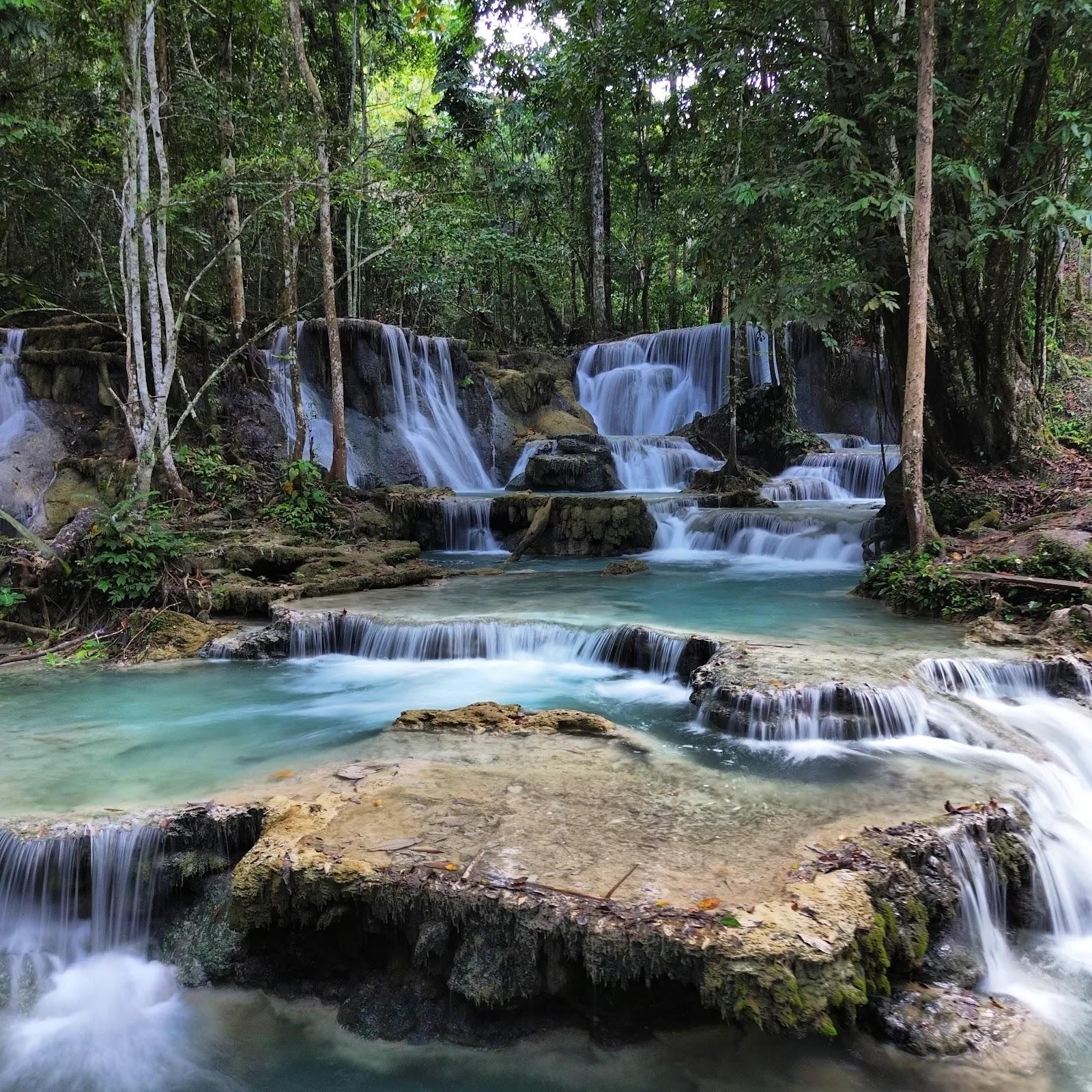
For a different landscape, Piala Waterfall in Hanga-Hanga Village and Salodik Waterfall offer freshwater pools and forest scenery. Travelers continuing toward Peleng Island can also combine a Luwuk hills visit with Paisu Pok Lake, the region’s well-known blue lake.