
Piala Waterfall: Banggai’s Terraced Cascade and Natural Trophy
Piala Waterfall is a terraced waterfall in Kelurahan Hanga-Hanga, Kecamatan Luwuk Selatan, Kabupaten Banggai, Central Sulawesi—approximately 15 to 30 minutes by vehicle from central Luwuk. It is one of the most accessible waterfall destinations around Banggai and is widely visited by local travelers. On weekends, that accessibility also means the site can become busy.
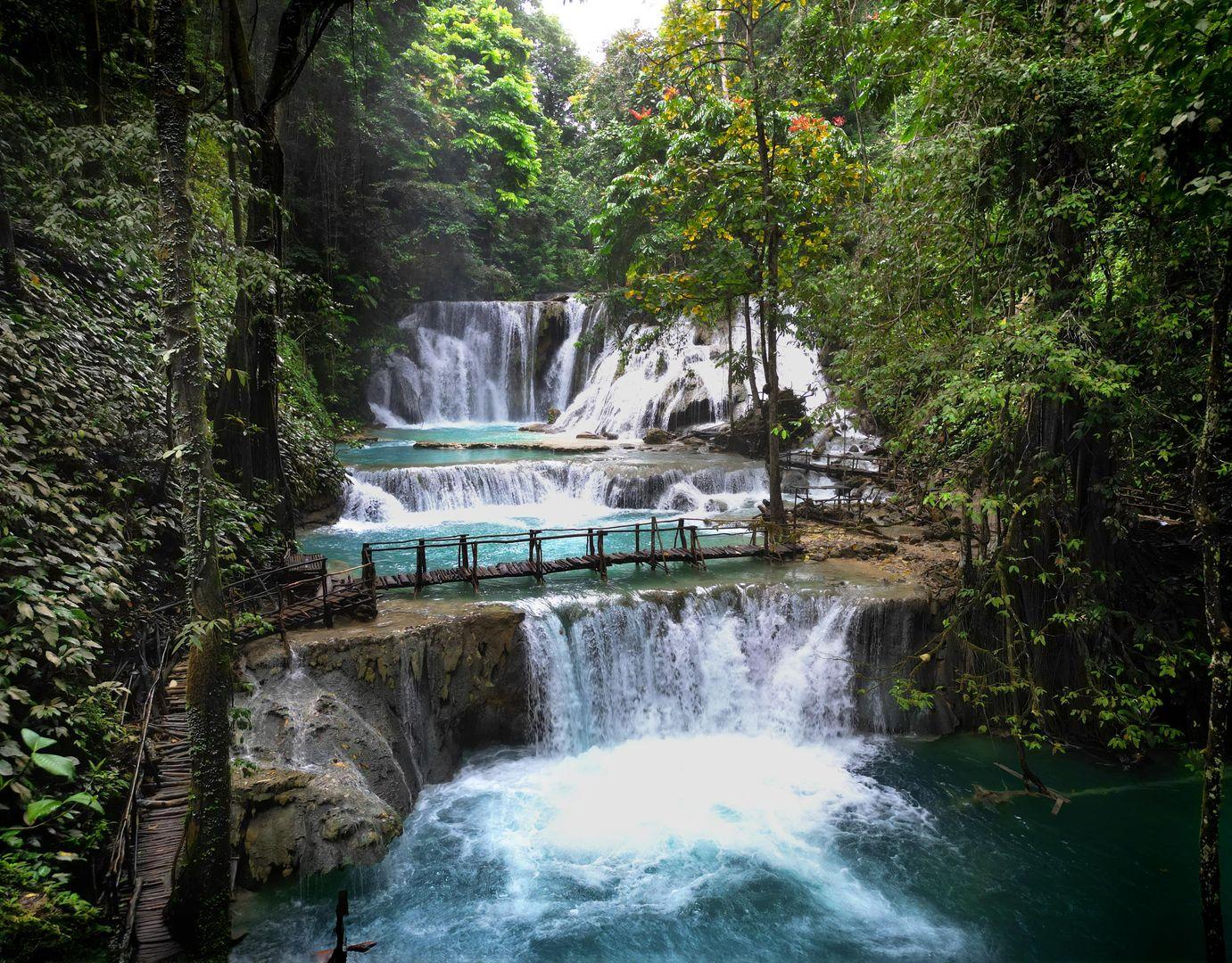
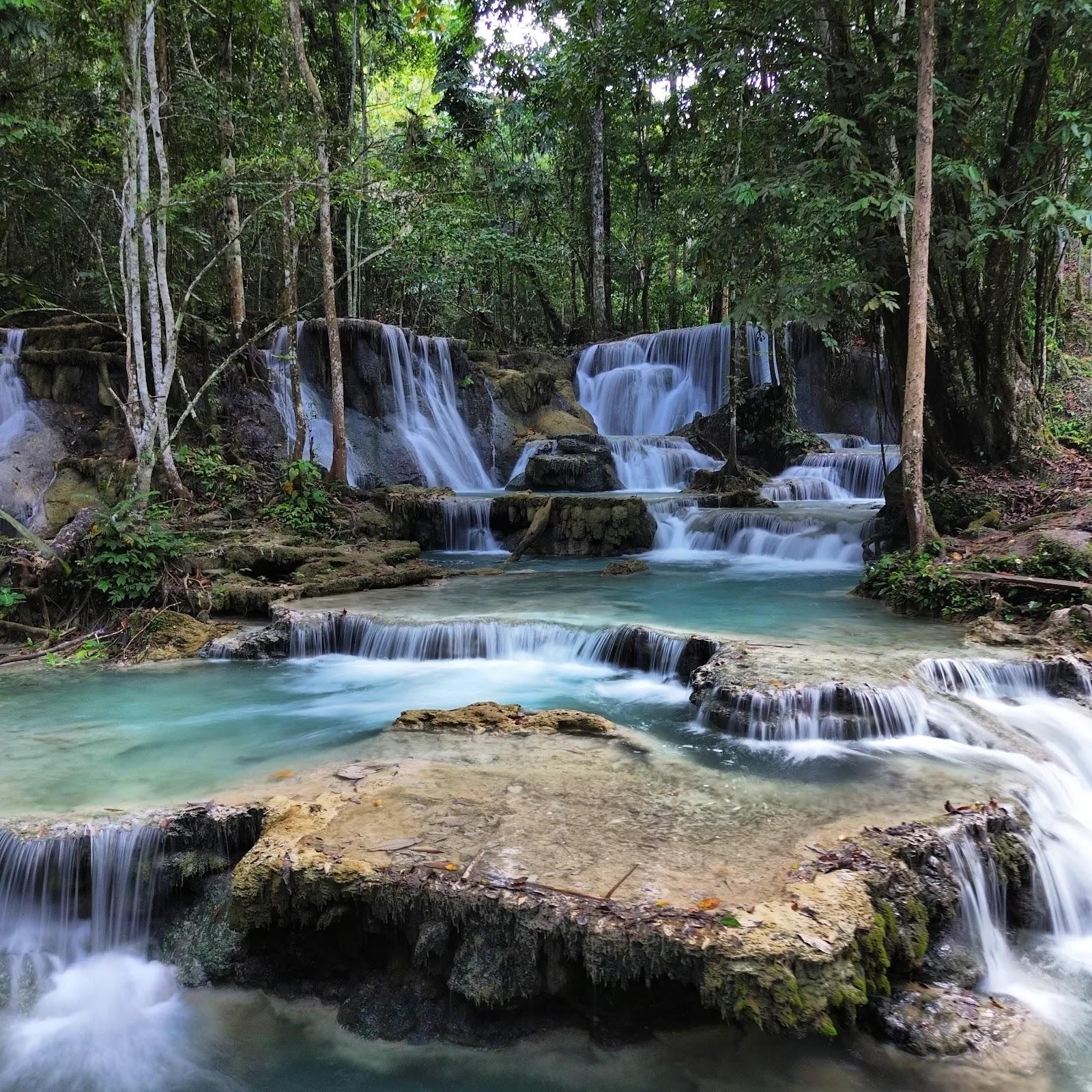
The name comes from the shape of the rock. The cascade flows over a series of stepped rock shelves, and the water collecting at each level creates bowl-like basins that locals compare to a trophy (piala) or a chalice. The water is clear and greenish-blue, with the surrounding forest keeping the area shaded and cool.
The Terraced Cascade and the Pool
Piala is not a single vertical drop. Water descends through multiple tiers, with individual sections reported at around 7 meters, creating a staircase-like cascade and natural pools along the way.
The main pool is deep in places, with reports of up to about 4 meters, so non-swimmers should remain in shallow sections. The water is cold and clear, while pale rock beneath the surface helps produce the distinctive green-blue appearance.
A wooden bridge and bamboo seating areas provide places to stop and view the upper sections of the waterfall. The setting is scenic, but Piala is a managed recreation site rather than an untouched wilderness.
The Trek from the PLTMH Gate
Access to the waterfall passes through the PLTMH (micro-hydroelectric) water gate, associated with a small power facility. From the gate, the trail continues for approximately 10 to 15 minutes on foot through forest.
The trail is steep and slippery in sections, particularly after rain. Tree roots, low branches and ropes may be used for balance on steeper parts. The walk is short, but sturdy footwear with good grip is recommended.
Children can visit with close adult supervision, especially near steep sections and deep water.
Facilities, Fees, and Opening Hours
Piala is a managed destination with visitor facilities that have improved in recent years. Reported facilities include:
- Changing rooms and toilets
- Parking area
- Food stalls selling snacks and drinks
- Bamboo seating and wooden tables
- A wooden bridge for viewing the upper tiers
The entrance fee is generally reported at around Rp5,000 per person, with some sources reporting variation up to Rp10,000 depending on the period and local management. Facilities and fees can change, so travelers should confirm locally.
Opening hours are commonly listed around 07:30 to 17:00 WITA, although some travel sources describe access as more flexible. Morning to midday is generally the most practical period to visit.
How to Get to Piala Waterfall
From central Luwuk, drive toward Kelurahan Hanga-Hanga in Kecamatan Luwuk Selatan. Depending on traffic and road conditions, the trip usually takes around 15 to 30 minutes.
A car or motorbike can reach the accessible parking area. The final section continues on foot to the waterfall.
Road conditions deserve attention during the rainy season. A landslide on 24 July 2026 temporarily blocked part of the route toward Piala in Hanga-Hanga, and an excavator was brought in to clear the material. Local reporting also warned visitors to remain alert to possible additional landslides during continued heavy rain.
Best Time to Visit and Safety
The dry season, roughly May to October, generally offers more stable road and trail conditions. Morning is a good time for cooler temperatures, softer light and fewer visitors than peak weekend periods.
Safety notes:
- The main pool is deep in the center, reportedly reaching around 4 meters in places.
- The trail from the gate can be steep and slippery.
- Heavy rain can worsen road and trail conditions and increase landslide risk.
- There are no lifeguards, so visitors are responsible for supervising children and assessing their own swimming ability.
What to Bring and What to Expect
Bring: Cash for the entrance fee, sturdy shoes with grip, a change of clothes if you plan to swim, insect repellent, drinking water and a dry bag for electronics.
Do not expect: A remote, untouched wilderness. Piala is a popular managed destination with food stalls, seating and more visitors on weekends. Its main advantage is accessibility: you can experience a distinctive terraced waterfall without committing to a long expedition.
FAQ
Is Piala Waterfall suitable for children?
Yes, with supervision. The trek is relatively short and there are shallow areas for wading. However, the trail has steep sections and the main pool is deep in the center, so children should remain close to adults.
How much is the entrance fee?
The commonly reported fee is Rp5,000 per person, with some sources reporting up to Rp10,000. Confirm the current amount locally before entering.
Can you swim at Piala Waterfall?
Yes. Swimming and playing in the water are common activities when conditions are safe. The water is cold and clear, but deeper sections require extra caution.
How long is the trek from the parking area?
Approximately 10 to 15 minutes on foot from the PLTMH gate. The trail is short but can be steep and slippery.
Is Piala Waterfall accessible after rain?
The site may still be reachable after light rain, but the trail and road can become slippery or difficult after heavy rainfall. Because landslides have affected the access route, check local conditions before visiting during the rainy season.
Related Destinations
Laumarang Waterfall is nearby and provides a more challenging waterfall experience. Mokokawa Waterfall is another terraced cascade in the Hanga-Hanga area with a longer forest trek. Kilo 5 Beach in Luwuk can be combined with a waterfall visit for a mixed nature itinerary. Travelers continuing toward Peleng Island can also include Paisu Pok Lake, one of Banggai’s best-known freshwater destinations.
.jpg)