
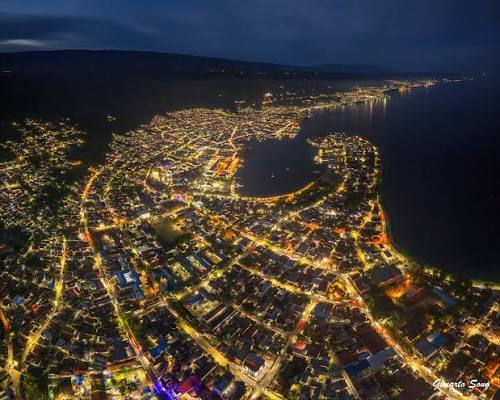
Bali has long been the face of Indonesian tourism to the world. However, for some travelers, the crowds and highly organized tourism experience can take away the sense of adventure they are looking for. If you are longing for an Indonesia that is quieter, wilder, and more authentic, look east. In the heart of Central Sulawesi lies a region offering a completely different island experience: Luwuk and the Banggai Islands. This area is not a miniature version of Bali. It is something else entirely, and that is precisely where its appeal lies.
Why Choose Luwuk and Banggai Instead of Bali
The most fundamental difference is the pace. Bali moves fast. Banggai moves slowly. In Luwuk, the main gateway city to the region, you will not find rows of beach clubs or roads crowded with tourists. Instead, there are busy ports filled with fishing boats, markets selling fresh seafood, and coffee stalls where people sit and chat at a relaxed pace.
The Banggai Islands are scattered off the eastern coast of Sulawesi. To reach major islands such as Peleng and Banggai Laut, you need to take public ferries that are also used by local residents to transport their daily necessities. This is not a carefully curated tourist journey. It is a real journey. And for many people, that is exactly the experience they have been searching for.
How to Reach Luwuk and the Banggai Islands
Flights to Luwuk
Luwuk is served by Syukuran Aminuddin Amir Airport (LUW). The airport only handles domestic flights, with most connections through Makassar. In 2026, Indonesia AirAsia opened routes connecting Luwuk with Surabaya, Kendari, and Palu via Makassar, making the region easier to access than in previous years. Flights from Makassar to Luwuk usually take around one to two hours.
For international travelers, the most common route is to fly to Jakarta or Bali, then continue on a domestic flight to Makassar before taking the final connection to Luwuk. There are no direct international flights to Luwuk; all international arrivals must pass through domestic hubs such as Makassar, Jakarta, or Manado.
Sea Transportation to the Islands
Once you arrive in Luwuk, Pelabuhan Rakyat is the main departure point for the islands of the Banggai Archipelago. Public ferries to Leme Leme on Peleng Island usually depart at around 2:00 PM and take approximately two hours. Tickets can be purchased on site, with reported prices of around IDR 50,000 per person, although fares and schedules may change.
For destinations such as Salakan on Banggai Island or Banggai Town in Banggai Laut, ferry and fast-boat services are also available. Keep in mind that ferry schedules in this region can change at any time depending on weather and sea conditions. Always check the latest information at the port or through local sources before departing.
Best Time to Visit
The dry season, which usually runs from May to October, is generally the best period for exploring Luwuk and the Banggai Islands. During these months, the weather tends to be clearer, the sea calmer, and underwater visibility for snorkeling or diving much better. However, weather patterns can vary from year to year. Sea conditions and crossing schedules can change quickly, so it is always wise to check the latest weather forecast and local information before planning a sea journey.
If you plan to stay in Luwuk during the busy season from July to September, it is advisable to book your accommodation in advance.
Things to Do in Luwuk and Surrounding Areas
Luwuk is not simply a transit point. The city and its surrounding areas offer plenty of places worth exploring, especially if you enjoy nature-based travel.
Paisu Pok Lake: The Blue Lake in the Heart of Banggai
This is one of the area’s icons. Paisu Pok Lake is located in Luk Panenteng Village, Bulagi Utara District, in Banggai Islands Regency. The water is exceptionally clear, allowing the sandy and rocky lake bottom to be seen clearly. Its color changes depending on the sunlight, ranging from silvery green to deep turquoise blue.
The name Paisu Pok is said to mean “black water” in the local language, although the water itself is not black at all. What is clear is that the lake has become a magnet for both domestic and international travelers in recent years.
Around the lake, visitors can rent small boats, canoes, or paddleboards to explore the water. Swimming and snorkeling are also possible, although the water can feel cold in the morning. Entrance fees are reportedly around IDR 10,000 per person, with additional charges for boat or gazebo rentals. Prices may change, so treat these figures as a general guide.
Piala Waterfall: Turquoise Green Water Close to the City
Piala Waterfall is located in Hanga-Hanga Village, South Luwuk District, only about 20 minutes by car from central Luwuk. The waterfall features a clear blue-green natural pool, while the unique shape of the flowing water resembles a cup or trophy, which is where its name comes from.
It is a popular destination for swimming and photography. Entrance fees are reported to be very affordable, around IDR 5,000 to IDR 10,000, and the site is open daily from around 7:30 AM to 5:00 PM Central Indonesia Time. Because of its proximity to the city, Piala Waterfall can be a good choice for filling the first or final half-day of your stay in Luwuk.
Salodik and Kamumu Waterfalls
Besides Piala, there are several other waterfalls around Luwuk offering a different atmosphere. Salodik Waterfall is located in Salodik Village, North Luwuk District, around 20 kilometers from the city center and about an hour away by road. The waterfall features several tiers and is surrounded by lush forest.
Meanwhile, Kamumu Waterfall is located in Kamumu Village, also in North Luwuk District, around 26 kilometers from Luwuk. What makes Kamumu different is the pine forest surrounding it, creating a cool and peaceful atmosphere. Visitors may need to walk for 15 to 20 minutes after reaching the village.
Kilo 5 Beach: Clear Water Close to Town
If you want to enjoy a beach without taking a boat to an island, Kilo 5 Beach is the answer. Located only about 5 kilometers from central Luwuk, the beach has white sand and relatively clear seawater, allowing coral reefs and small fish to be seen from the surface.
At the beach, you can rent snorkeling equipment, try a banana boat, or simply sit at the seaside cafés serving affordable food and drinks. It is a good place to relax and enjoy the sunset after a full day of exploration.
Teletubbies Hill
Although its name refers to a children’s television show, Teletubbies Hill in Luwuk offers wide views of rolling green hills, resembling landscapes seen in some films. It is located in Lumpoknyo Village, Luwuk District, around 12 kilometers from the city center. The location is suitable for photography, especially in the morning or late afternoon when the sunlight is softer. Travel time from the city center can vary, with some reports suggesting around one hour depending on road conditions and transportation.
Diving and Snorkeling: The Banggai Cardinalfish
For divers, the Banggai Islands have a very specific attraction: the endemic Banggai cardinalfish (Pterapogon kauderni). This small fish, with black stripes and white spots, is naturally found only in waters around the Banggai Islands. Unfortunately, its population is threatened by overfishing for the aquarium trade.
The waters around islands such as Peleng offer relatively healthy coral reefs that remain comparatively untouched by mass tourism. Snorkeling and diving here can feel much more intimate than at better-known destinations. However, diving infrastructure in the region is not as comprehensive as in Bali or Raja Ampat. You may need to bring some equipment yourself or rent from local operators, whose numbers remain limited.
Accommodation and Local Transportation
In Luwuk
Luwuk offers a fairly diverse range of accommodation, from simple homestays to star-rated hotels. For budget travelers, homestays are available from around IDR 100,000 per night. For greater comfort, there are mid-range hotels and star-rated properties such as Swiss-Belinn or Hotel Santika. Prices and room availability can fluctuate, so it is always a good idea to book ahead, especially during the busy season.
Transportation within Luwuk is relatively easy. Conventional taxis are available, and ride-hailing services such as GoJek also operate in Luwuk. To visit places outside the city, you can rent a motorcycle or car. Motorcycle rental is reportedly around IDR 100,000 per day, while a car with driver can cost around IDR 800,000 to IDR 1,200,000 per day. These are estimates and may change.
In the Banggai Islands
On islands such as Peleng and Banggai, accommodation options are much more limited. Homestays are the main choice. One name often mentioned by foreign travelers is Novpitri Homestay, with air-conditioned rooms reportedly costing around IDR 200,000 and fan rooms around IDR 150,000. Again, these are estimated prices and may change.
On the islands, transportation between beaches and islands usually relies on local boats that can be rented. Sharing a boat with other travelers is a common way to reduce costs. Your accommodation can often help arrange boats and local guides for day trips.
Money, Connectivity, and Important Preparations
One of the most important things to prepare for a trip to Banggai is cash. ATMs may be available in Luwuk and larger towns such as Banggai Laut, but in villages and smaller islands, ATM access is very limited or may not exist at all. Bring more cash than you expect to need. Do not assume that credit cards or digital payments will be accepted everywhere.
Mobile connectivity is another consideration. Phone and data signals are generally good around Luwuk and major towns, but they can become very limited or disappear entirely on remote islands. If you need an internet connection for work or communication, it is best to handle important matters before leaving Luwuk.
For visas, most travelers from ASEAN countries and some other countries can enter Indonesia without a visa or with a visa on arrival. However, rules can change. Always check the latest visa requirements for your nationality before traveling.
Where to Find Local Information and Assistance
Exploring Luwuk and the Banggai Islands independently is possible, but it requires more careful planning than traveling to a well-established tourist destination. Ferry schedules are not always consistent, roads can be challenging, and online information can be limited.
This is where local resources can be very helpful. There are several local platforms and service providers focusing on this region. If Banggai Wonderland is relevant to your travel plans, it is one of the sources providing information and private-trip options for the Banggai area. You can also look for information from independent travel blogs or join traveler communities that have visited the region.
Most importantly, do not hesitate to ask local residents for help. People in Luwuk and the surrounding islands are generally friendly and happy to assist when approached with good intentions and respect.
Conclusion
Luwuk and the Banggai Islands are not a replacement for Bali. They are a different choice. While Bali offers proven convenience and extensive infrastructure, Banggai offers something that is becoming increasingly rare: room to breathe, waters that remain relatively untouched, and a journey that requires a little more effort but rewards you with a more personal experience.
Getting here takes time, patience, and a willingness to accept uncertainty. Schedules can change. Roads can have potholes. Signals can disappear. But if you are looking for an Indonesia that still holds a sense of mystery, a place where beauty does not need to be announced with giant signs, Luwuk and Banggai are worth considering. Bring your curiosity, enough cash, and a flexible schedule. The rest will follow.