
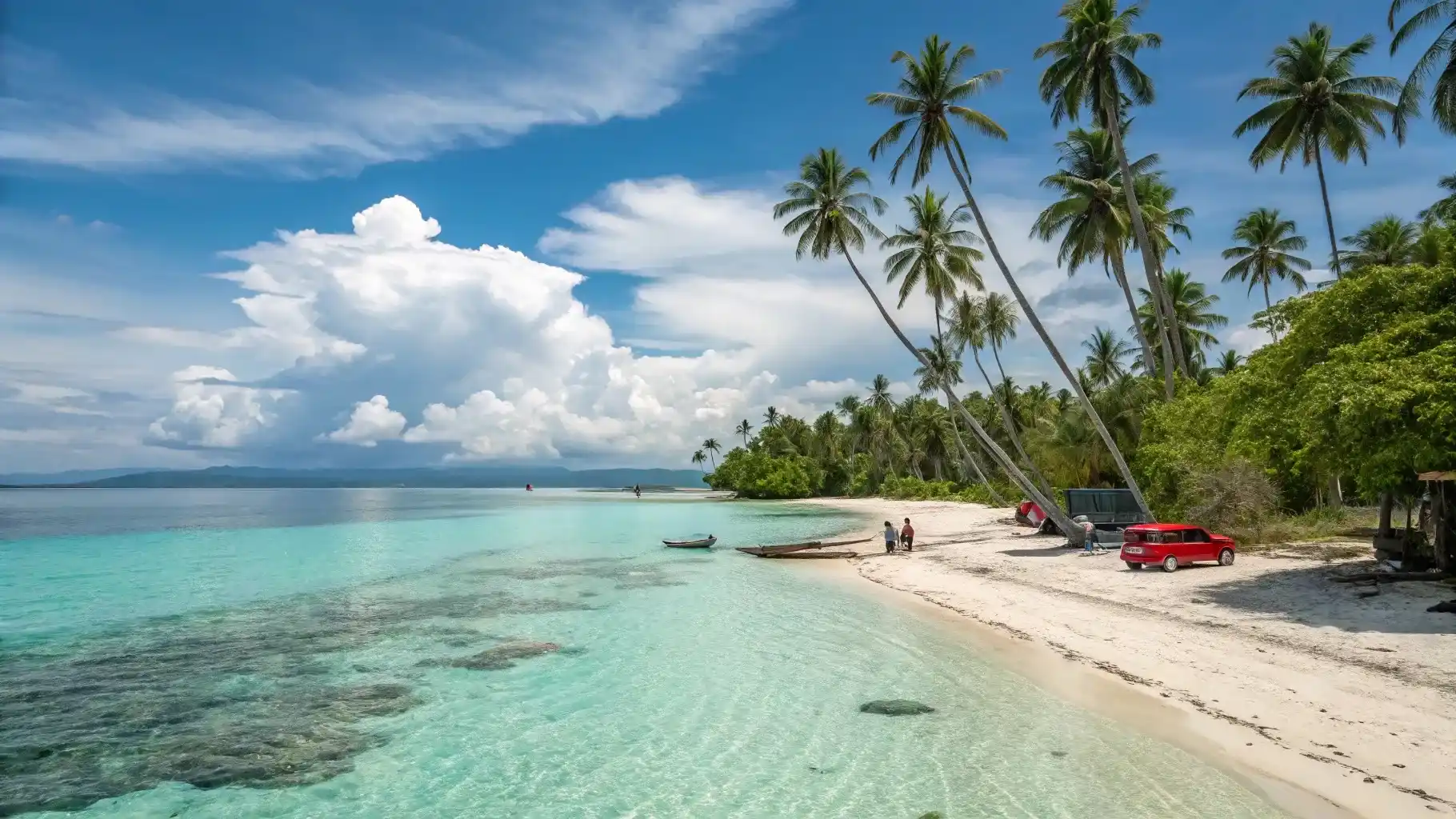
A successful Banggai Islands trip depends on more than choosing beautiful places. The route also involves local road transfers, sea crossings, waiting time, and schedules that may change. If you are starting in Luwuk and want to explore Peleng Island, build your itinerary around transport connections first, then add destinations that fit the available time.
The most useful rule is simple: do not plan every hour as if transfers were guaranteed. Weather, sea conditions, operator schedules, and the harbour you need can all affect the day.
Start with your main travel goal
Choose the experience that matters most before deciding how many places to visit.
- Lake Paisu Pok and Peleng: give the island portion of the trip enough time instead of treating it as a quick detour from Luwuk.
- Beaches and bays: group places by area and confirm road access with a local operator.
- A short stop in Luwuk: choose nearby activities and avoid relying on a same-day island crossing unless the transport plan has been confirmed.
Lake Paisu Pok, Paisu Batango, Kawalu Bay, and Poganda may fit into a broader trip, but the best order depends on where you stay, available transport, and current conditions. Do not treat every destination as a fixed stop on one packed day.
Plan the journey in stages
Stage 1: Arrive in Luwuk
Check your flight arrival time and identify the correct harbour for your intended route. Allow time for baggage, food, local transfers, and possible delays. Avoid tight connections between a flight and a boat unless the timing has been verified with the relevant operator.
Stage 2: Cross to Peleng
Confirm the departure harbour, destination port, operating day, and expected arrival locally before travelling. Different services may use different departure points, so do not assume that every boat leaves from the same harbour or arrives near your final destination.
Stage 3: Explore the island
Prioritise the places you most want to see and group additional stops by location. Leave time for road travel, meals, rest, and changes in conditions. If Lake Paisu Pok is the main reason for your trip, protect time for it and treat other stops as optional.
Stage 4: Return with a buffer
Avoid scheduling a major activity immediately before a boat departure or flight. When possible, spend a night in Luwuk before your flight home. This is especially helpful when your return depends on a sea crossing whose timing can change.
How many days should you allow?
There is no single duration that works for every visitor. A short visit can focus on Luwuk, while a trip that includes Peleng needs room for inter-island transport and time at the destinations.
Use these planning principles:
- Limited time: choose one main area and fewer stops.
- Several days: reserve a specific transfer window, then group destinations by area.
- Flexible dates: keep a spare night or day so a schedule change does not disrupt the whole itinerary.
Treat journey durations as estimates, not guarantees. Weather, sea conditions, transport operations, and waiting time can all change the plan.
Before you leave
- Confirm the departure harbour and boat schedule with a local source.
- Arrange road transport and pickup on the destination island.
- Check the weather forecast and sea-condition updates.
- Carry cash, drinking water, personal medication, sun protection, and a waterproof bag.
- Keep your accommodation or guide informed if your arrival time changes.
- Follow local guidance and leave lakes, beaches, and villages clean.
When is a private tour useful?
A private tour can make it easier to coordinate a driver, local guide, and destination stops, especially for first-time visitors. It cannot remove weather-related disruption or guarantee public boat schedules. Ask what the package includes and which transport details still need confirmation.
Explore our Luwuk Banggai tour service to discuss your route. Share your dates, group size, arrival time in Luwuk, and must-see places so the itinerary can be planned around real constraints.
Final advice
A good Banggai itinerary is not the one with the most stops. It is the one that allows enough time to move between islands and enjoy the places you came to see. Prioritise your main destination, verify transport shortly before departure, and leave a buffer for changes.