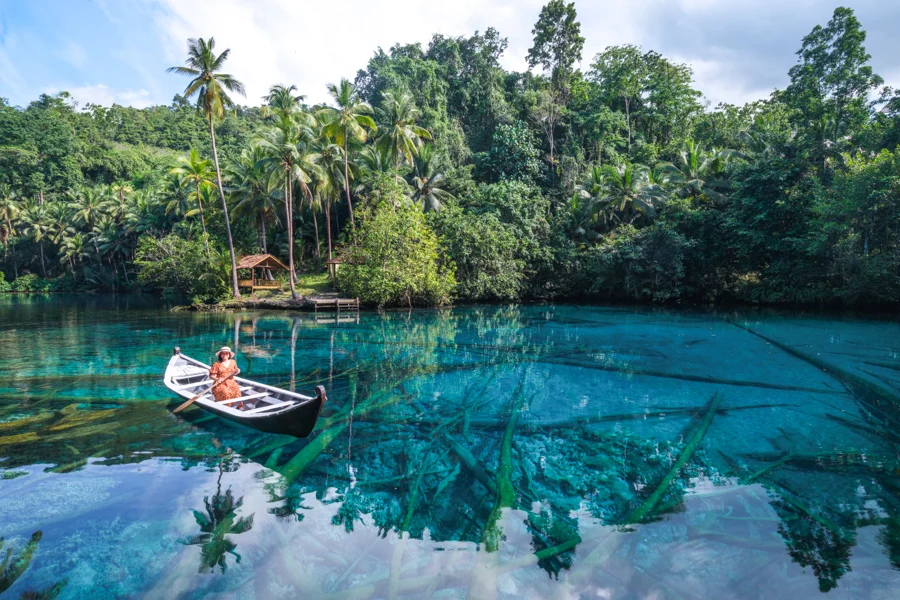
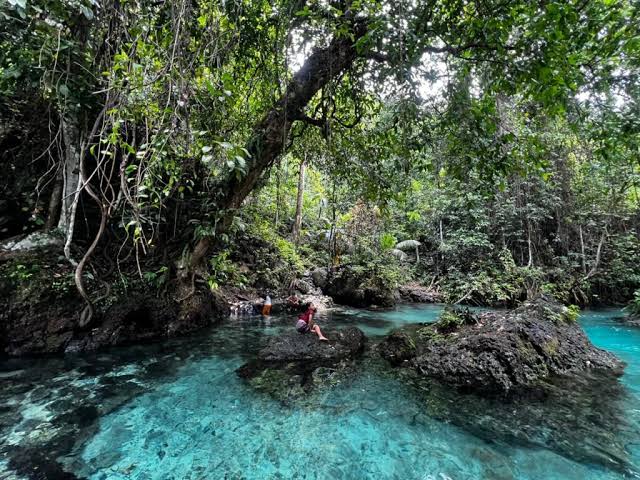
Paisu Batango is a coastal freshwater spring and lagoon in Desa Luk Panenteng, Kecamatan Bulagi Utara, Kabupaten Banggai Kepulauan, Central Sulawesi, on Peleng Island. It sits on the southern side of the village, about 15 minutes before the better-known Paisu Pok Lake. Many travelers pass it on the way to Paisu Pok without realizing that it is a destination in its own right.
The name explains the setting. In the local language, paisu means water and batango means tree trunk, referring to spring water emerging near the base of a tree trunk and forming a small pool. It is not a conventional lake, but a tidal spring pool where different types of water meet.
The Three Waters and the Tidal Pool
Paisu Batango is unusual because it can bring together freshwater, brackish water and seawater. At low tide, the spring water dominates and the pool feels clear and fresh. At high tide, seawater enters and the water becomes more brackish or salty.
Local accounts also describe two water temperatures, with warm and cool water where spring flow and seawater currents meet. The pool is shallow and clear, surrounded by rocks, tree roots and dense greenery. Because the balance changes with the tide, the character of the pool can be different from one visit to another.
The Site: Dock, Gazebos and Village Use
Paisu Batango has a small set of facilities for a remote village attraction. The provincial tourism office lists a small dock, footpaths, eight gazebos, a guard room and a non-permanent mushala. The gazebos provide shade and make the site suitable for a short rest or picnic.
It is also a working village water source. Residents use the area for bathing and washing and collect water from rock holes for household needs. Visitors should therefore treat the pool as a shared community space, respect local activity and avoid anything that could pollute the water.
Access is generally free or based on a small local contribution, although tourism fees around the Paisu area may change as management develops.
Swimming, Snorkelling and Photography
Swimming is possible, although the depth changes with the tide. The pool is shallow compared with a conventional lake. Snorkelling is not the main attraction because the site is small and the bottom is mostly sand and rock, but the clear water makes it pleasant for wading and floating.
The surrounding rocks, tree roots and blue-green water also make Paisu Batango a good place for photography. The gazebos make it easy to turn the stop into a simple picnic break before or after visiting Paisu Pok.
How to Get to Paisu Batango
There are two main routes.
By road from Salakan: From Salakan, the regency capital, the journey to Desa Luk Panenteng takes about 3.5 hours by car or motorcycle. The route passes through green hills and coastal scenery. Paisu Batango is on the southern side of the village, before Paisu Pok.
By speedboat from Luwuk: From Luwuk, speedboats can take around 1 hour to the Luk Panenteng area. A boat for about 10 people has been reported at around Rp4 million, subject to local arrangements and current prices. This route can be combined with Paisu Batango, Paisu Pok and Poganda Beach in one day.
Another option is the public ferry from Luwuk to Salakan, followed by an overnight stay and a road journey to Luk Panenteng the next day.
Best Time to Visit
The dry season, roughly May to October, generally offers more stable road and sea conditions. For the freshest water, visit around low tide. At high tide, seawater enters the pool and the character becomes more brackish.
Morning is usually cooler and quieter, especially for travelers combining Paisu Batango with Paisu Pok.
What to Bring and What to Expect
Bring: Cash, drinking water, insect repellent, a change of clothes if you plan to swim, and a camera.
Do not expect: A formal ticket office, changing rooms, showers, restaurants or a managed swimming area. Paisu Batango is a village spring with basic facilities, not a resort.
FAQ
Is Paisu Batango the same as Paisu Pok?
No. They are two separate sites in the same village. Paisu Pok is the larger freshwater lake on the northern side of Luk Panenteng, while Paisu Batango is the smaller coastal spring on the southern side.
Can you swim at Paisu Batango?
Yes. Swimming is possible, but the depth changes with the tide. The pool is also used by local residents, so visitors should be respectful and keep the water clean.
Is there an entrance fee?
It is generally free or based on a small local contribution. Fees may change as local tourism management develops.
How do you get to Paisu Batango from Luwuk?
The faster option is a speedboat, taking about one hour depending on the departure point and sea conditions. Another route is the ferry to Salakan followed by a road journey of about 3.5 hours to Luk Panenteng.
When is the best time to see the freshwater character?
Around low tide, when spring water dominates the pool. At high tide, seawater enters and the water becomes more brackish.
Related Destinations
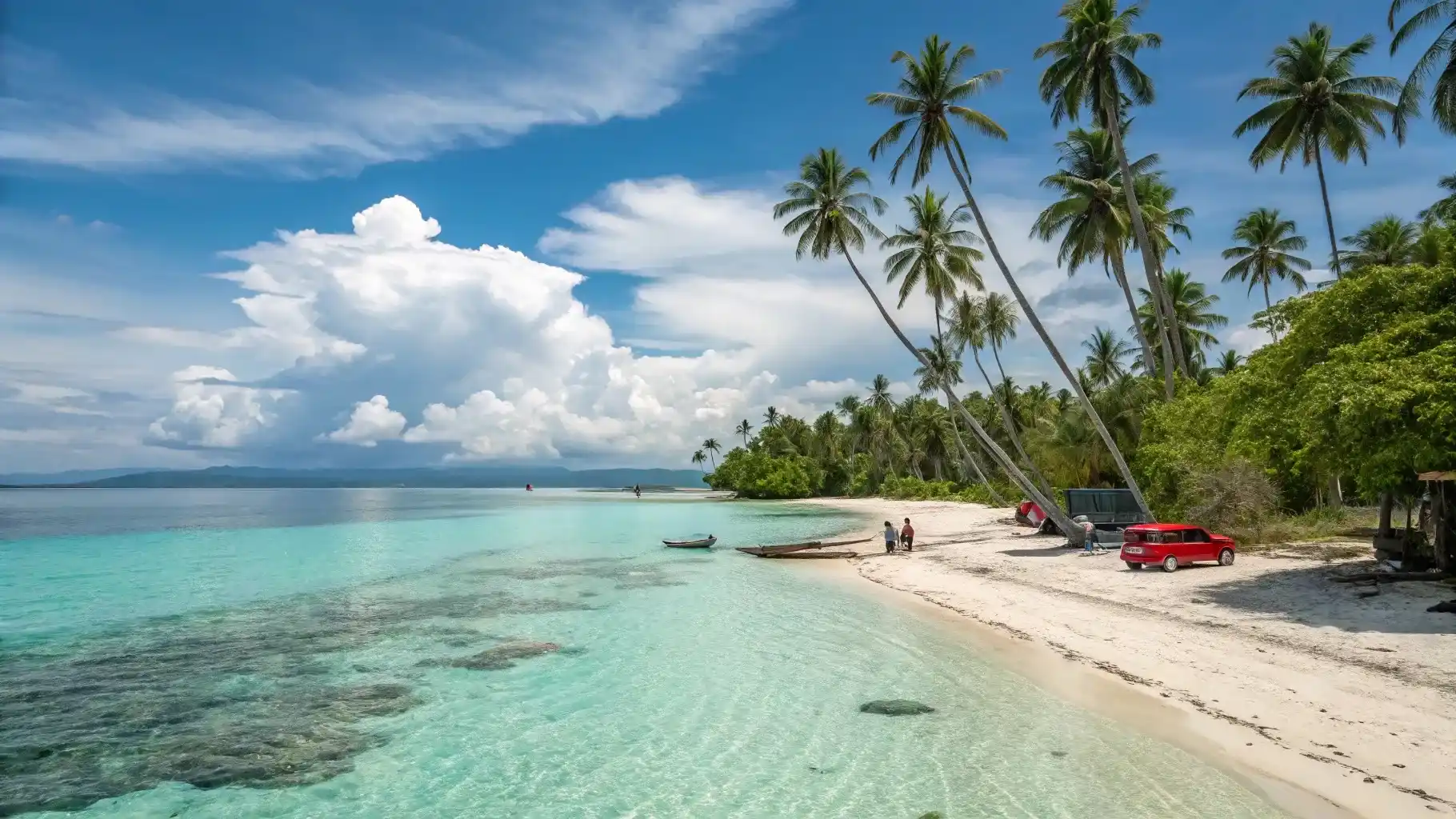
Paisu Pok Lake is the better-known freshwater lake in Luk Panenteng, about 15 minutes farther into the village. Poganda Beach is around 2 km south and offers white sand and snorkelling. On Banggai Island, Bontolan Beach and Oyama Beach are major coastal stops. Travelers based in Luwuk can also visit Kilo 5 Beach and Piala Waterfall.