Poganda Beach: Peleng Island’s Snorkelling Shore
Poganda Beach is a white-sand beach in Dusun Poganda, Desa Luk Panenteng, Kecamatan Bulagi Utara, Kabupaten Banggai Kepulauan, Central Sulawesi, on Peleng Island. It sits at the end of the village, about 15 minutes by road from Paisu Pok Lake, and forms part of the same tourism cluster as the lake and the Paisu Batango spring.
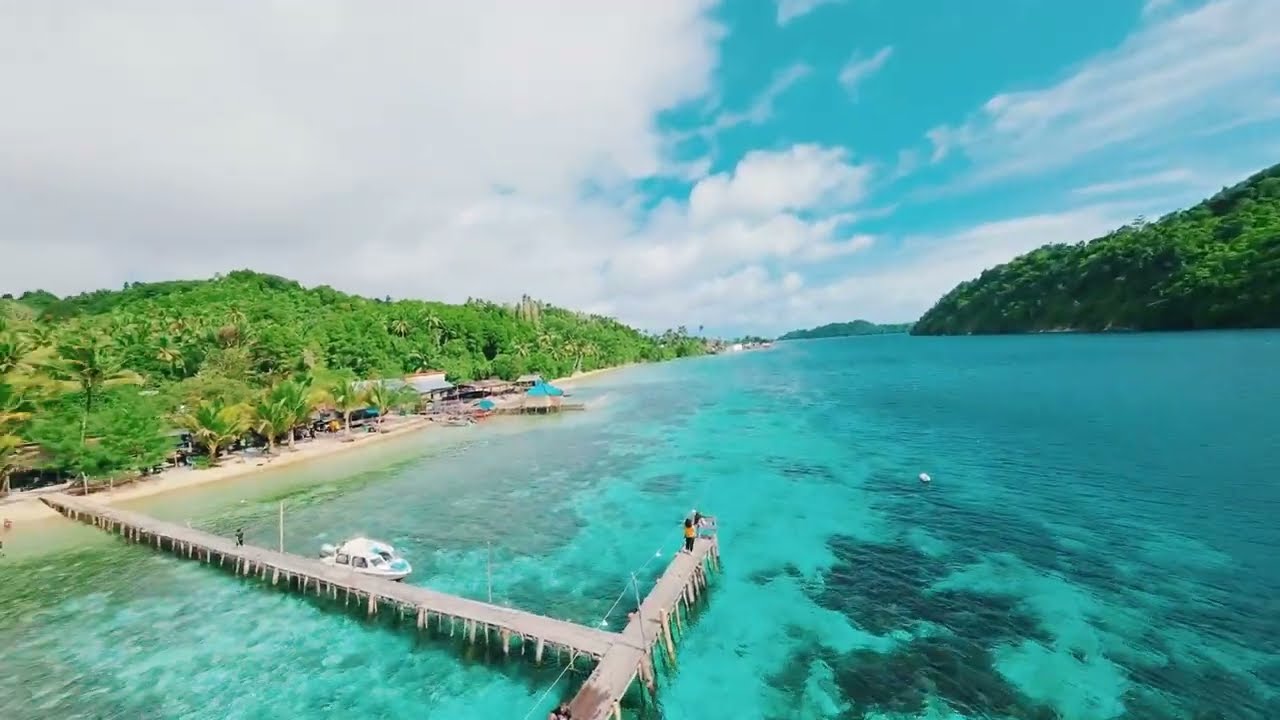
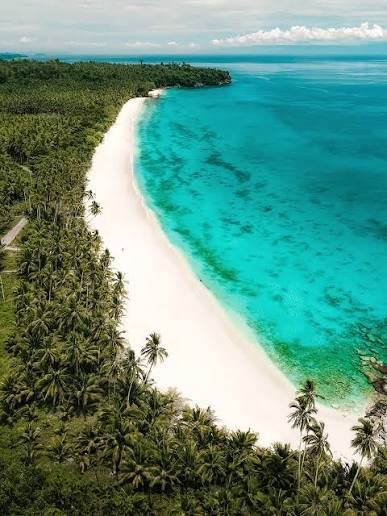
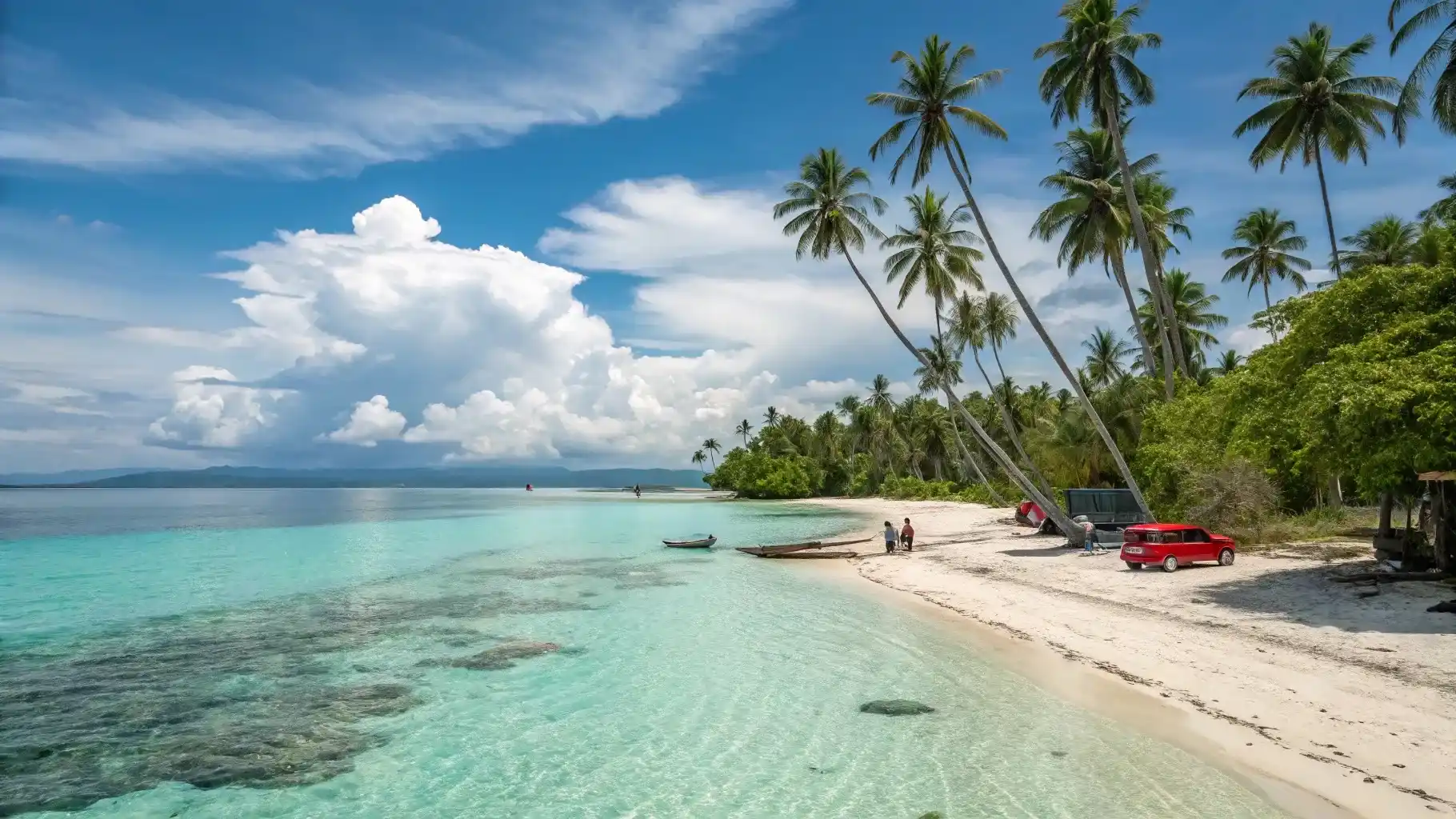
The beach runs for approximately 3.4 kilometres, with fine pale sand, clear turquoise water, and calm waves. It is a long village beach rather than a resort, with a quiet atmosphere, coconut trees, simple shelters, and a reef close to shore.
The Beach and the Coconut Grove
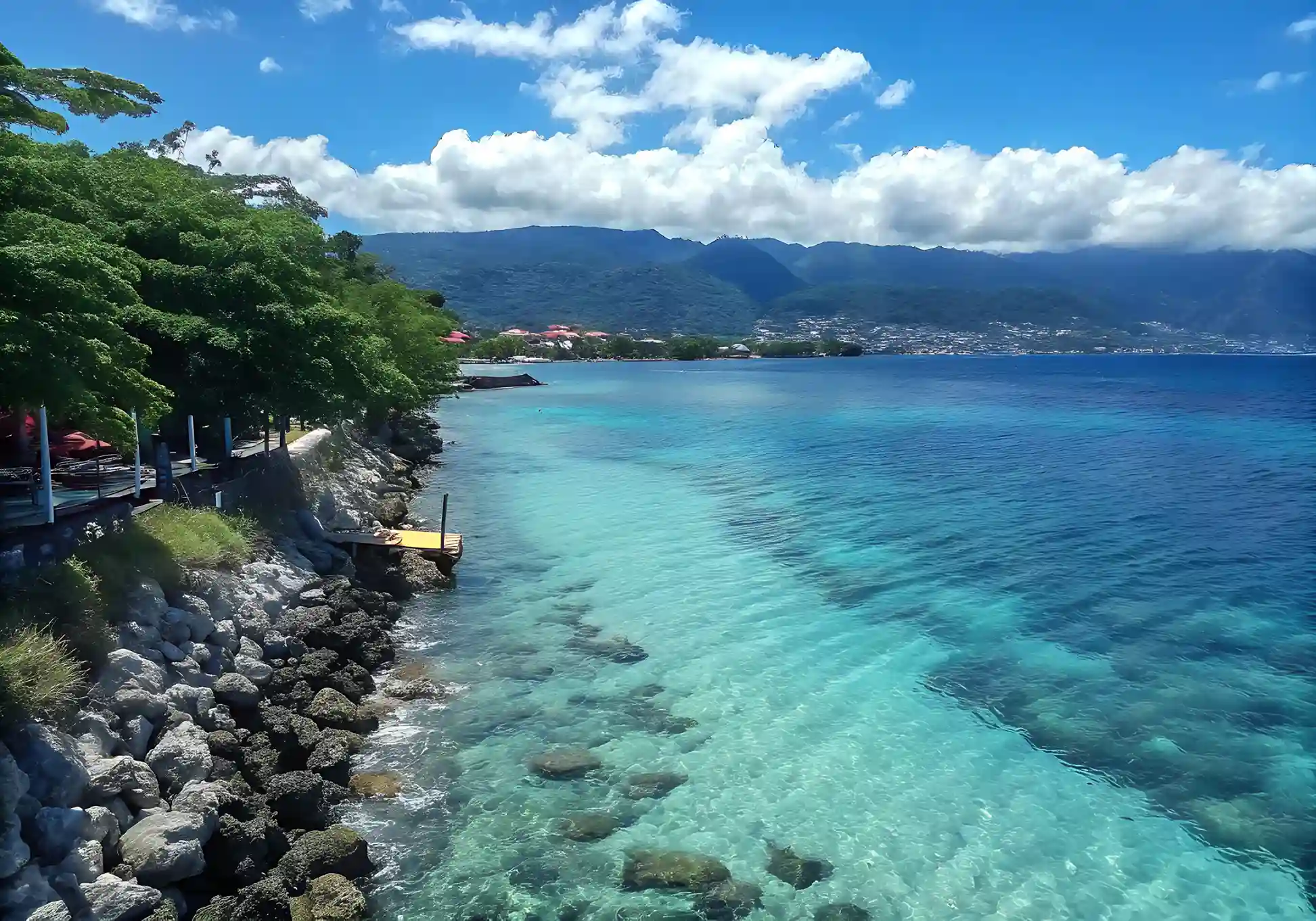
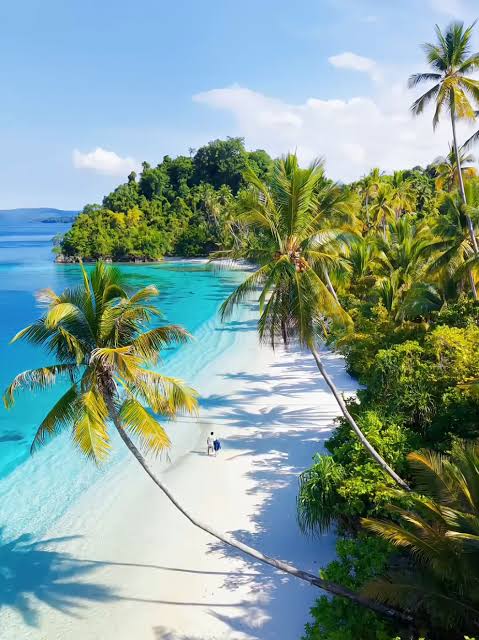
Poganda is a long, gently curving shoreline rather than a small cove. The sand is soft and white, while the water shifts from pale turquoise in the shallows to deeper blue farther offshore. The waves are generally calm, making the beach suitable for families when sea conditions are safe.
A coconut grove separates the village from the shoreline. From nearby homestays, visitors walk roughly 100 metres through the grove before reaching the sand.
Simple bamboo structures with coconut-leaf roofs provide shade and rest areas. A small wooden pier extends into the water, and swings along the beach provide photo spots. The atmosphere is local and village-like rather than resort-style.
Snorkelling and Diving at Poganda
The reef is one of Poganda’s main attractions. It runs parallel to the coast, beginning just offshore and sloping gradually downward. Reports describe coral at around 2 to 4 metres depth near the beach, making the reef accessible to snorkellers and beginner divers.
Firsthand accounts describe a mix of hard and soft corals and marine life including stonefish, mantis shrimp, anemones, boxfish, banded sea snakes, and clownfish. The wider Banggai waters are also known for the Banggai Cardinalfish, endemic to the archipelago.
A local dive club operates in the area, and travel agents based in Luwuk can arrange equipment and divemasters. Divers should make arrangements before arriving rather than expecting a full-service dive centre on the beach.
Facilities and Fees
Poganda has basic but functional visitor facilities:
- Toilets and bathrooms, reported at around Rp5,000 per person
- Bamboo shelters and shaded seating
- Small wooden pier for access and viewing
- Swings for photographs
- Parking area
Reported entrance fees are around Rp2,000 per person, with another local source reporting Rp5,000 for two people. Vehicle entry is around Rp20,000, while bathroom use is reported at Rp5,000 per person. Local charges can change, so confirm the current amount on arrival.
Opening hours are generally listed around 08:00 to 17:00, although the shoreline itself may be accessible outside those hours depending on local arrangements.
There is no formal restaurant or food stall service at the beach in the sources used for this guide. Bring water and snacks or arrange meals through your homestay.
How to Get to Poganda Beach
There are two main approaches.
By public ferry from Luwuk: Fly into Luwuk (Syukuran Aminuddin Amir Airport, LUW) and continue to Luwuk People’s Port. The ferry to Salakan, the regency capital of Banggai Kepulauan, is reported to take around 4 to 5 hours, with fares around Rp70,000 per person in the cited travel reports. From Salakan, Poganda is approximately 2 hours by road, with the beach around 61 kilometres away by road according to travel sources. Public transport to the beach is limited, so travellers generally need a rental car or motorbike.
By chartered boat from Luwuk: Some travellers arrange a private boat directly from Luwuk to Poganda and Luk Panenteng. Travel reports put the charter around Rp750,000 to Rp1,000,000 per day, depending on the arrangement. This can make it easier to combine Poganda with Paisu Pok Lake and Paisu Batango Spring.
From village homestays, the beach is only a short walk through the coconut grove.
Where to Stay
There is no formal accommodation directly on Poganda Beach. The standard option is a homestay in Luk Panenteng village, where visitors stay in local family homes.
A basic bungalow option, Azzahara Cottage Pogonda, is also reported nearby, with electricity, a private bathroom and bucket shower. Sources note that mobile signal and internet may be unavailable there.
Camping on the beach may be possible with local permission, but it is not a formally managed campsite. Bring your own equipment and supplies.
Best Time to Visit
The dry season, roughly May to October, generally offers calmer seas and clearer water for snorkelling. Morning and late afternoon are good times for cooler temperatures, softer light and photography.
Sunrise and sunset are among the highlights reported by visitors, while calm sea conditions can improve underwater visibility.
What to Bring and What to Expect
Bring: Cash for local fees, snorkelling gear or pre-arranged equipment, reef-safe sunscreen, drinking water, snacks, insect repellent, and a dry bag for electronics.
Do not expect: A resort, formal restaurant, reliable mobile signal, or full equipment rental directly on the beach. Poganda is a village beach with basic facilities, and part of its character comes from that local setting.
FAQ
Is Poganda Beach good for snorkelling?
Yes. The reef begins close to shore and is reported at around 2–4 metres depth, making it accessible to snorkellers. Reports describe healthy hard and soft corals and a variety of reef life.
How much is the entrance fee?
Reported local fees are around Rp2,000 per person, with another source reporting Rp5,000 for two people. Vehicle entry is around Rp20,000, and bathroom use around Rp5,000 per person. Confirm current prices locally.
Is there accommodation at Poganda Beach?
No formal accommodation is reported on the beach itself. Visitors generally stay in homestays in Luk Panenteng or use basic nearby bungalow accommodation.
How do you get to Poganda from Luwuk?
The public route is to take a ferry from Luwuk to Salakan, then continue by road for roughly 2 hours to Poganda. A private boat charter from Luwuk is another option and can combine the beach with the nearby Luk Panenteng attractions.
Can you swim at Poganda Beach?
Yes. The beach is known for relatively calm, clear water, but conditions can change. Always assess the sea locally before swimming and be aware of boat traffic around the pier.
Related Destinations
Paisu Pok Lake is about 15 minutes by road from Poganda and is one of the best-known freshwater destinations in Banggai. Paisu Batango Spring is in the same village and can be combined with the beach on the same trip.
Mandel Beach and Oyama Beach are other notable island beaches. Piala Waterfall and Kilo 5 Beach are easier mainland options for travellers based in Luwuk.