
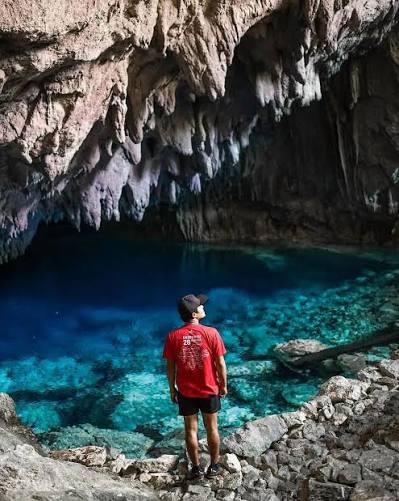
Banggai is known for turquoise lagoons, quiet islands, tropical forests and dramatic coastlines. Yet beneath its limestone landscapes lies another side of the region: caves shaped by water, rock and time.
For travelers who enjoy nature, photography and off-the-beaten-path experiences, exploring a goa—the Indonesian word for cave—is a rewarding way to see Banggai from a different perspective. The most notable destination to place on your itinerary is Goa Babang, while the wider Banggai and Banggai Islands region offers many lesser-known limestone formations that are best discovered with local guidance.
1. Goa Babang: Banggai’s Essential Cave Experience
Goa Babang is one of the most memorable natural attractions associated with the Banggai Islands. Set in a tropical landscape, the cave combines rugged limestone, cool shade and an atmosphere of quiet adventure.
The journey to Goa Babang is part of the experience. Visitors may encounter rural roads, forest scenery and changing terrain before reaching the cave area. Inside, the landscape becomes darker and cooler, with rock surfaces formed by natural geological processes.
Depending on recent conditions, parts of the cave may be damp or slippery. This makes Goa Babang more suitable for travelers who are comfortable walking carefully over uneven ground rather than visitors looking for a fully developed attraction.
Why visit Goa Babang?
- To experience one of the lesser-known natural attractions of the Banggai Islands
- To photograph limestone textures, cave entrances and surrounding greenery
- To enjoy a peaceful destination away from crowded tourist routes
- To combine a cave visit with the beaches, lagoons and villages of the Banggai Islands
- To learn more about the landscapes and stories connected to local communities
Goa Babang is best enjoyed slowly. Take time to observe the entrance, listen to the natural sounds around you and appreciate how the cave fits into the wider island landscape.
2. Coastal Caves and Limestone Formations Around the Banggai Islands
The Banggai Islands are shaped by the sea as much as by the land. Along parts of the coast, limestone cliffs, rock overhangs and small sea caves create dramatic scenery, particularly where clear water meets pale stone.
Not every coastal cave has an official tourism name or established access route. Some can only be reached by boat, while others are visible from the shore or accessible during suitable sea conditions. A local boat operator or guide can help identify safe places to explore and explain which locations are appropriate for visitors.
These coastal formations are especially attractive for travelers who enjoy combining nature activities. A day may include a boat ride, swimming in a calm bay, snorkeling near a reef and stopping at a rocky cove with a small cave entrance.
Always follow local advice about tides, currents and weather. A cave that appears easy to enter at one moment may become unsafe as the sea level changes.
3. Limestone Caves on Pulau Peling
Pulau Peling is one of the most interesting areas for travelers interested in the natural character of Banggai. The island is known for its forested hills, coastal scenery and limestone landscapes, including cave environments that may be visited with local assistance.
Many smaller caves on the island are not presented like conventional tourist attractions. They may be located near villages, forest paths or coastal areas, and access can vary according to weather, land conditions and community guidance.
If you want to explore beyond Goa Babang, ask residents or a trusted local guide about accessible cave sites in the area you are visiting. A local guide can help you:
- Find the correct trail or landing point
- Understand local customs and community rules
- Check whether the cave is safe to enter
- Avoid sensitive wildlife or cultural areas
- Choose the best time based on rainfall and sea conditions
This approach often leads to a more meaningful experience than trying to find hidden places independently.
4. Small Caves and Rock Shelters Near Luwuk
Luwuk is an excellent base for discovering the natural attractions of mainland Banggai. While the city is better known as a gateway to beaches, waterfalls and viewpoints, the surrounding limestone terrain also creates small caves, rock shelters and shaded formations.
Some of these places may be local recreation spots rather than formal tourist destinations. Their appearance and accessibility can change after heavy rain, road maintenance or natural erosion. For this reason, it is best to treat them as optional additions to a wider Luwuk itinerary rather than planning an entire trip around an unnamed cave.
A local guide or accommodation host may be able to recommend a suitable site based on your interests and fitness level. You can also combine cave exploration with visits to other natural attractions around Luwuk, creating a balanced day of forest, coast and limestone scenery.
5. Caves with Local Stories and Cultural Meaning
In Banggai, caves are not only geological features. Some may be connected to local stories, ancestral traditions or community history. The details can differ from one village to another, and these stories are often best understood through direct conversation with residents.
When visiting a cave near a village, ask permission before entering private land or taking photographs of people, ceremonies or culturally important areas. Listening respectfully is part of responsible travel and can make the journey much more memorable.
A guide may also explain why a cave has a particular name, how the community uses the surrounding land or which parts should not be entered. These conversations add depth to a destination that might otherwise appear to be only a beautiful rock formation.
What to Prepare Before Visiting a Cave in Banggai
Cave conditions in Banggai can be natural and changeable. Prepare for a simple adventure rather than a standardized attraction with guaranteed facilities.
Bring:
- Comfortable shoes with good grip
- Lightweight, quick-drying clothing
- A small flashlight or headlamp
- Drinking water and personal snacks
- Insect repellent
- A dry bag or waterproof pouch for electronics
- Basic first-aid supplies
- Cash for local transport or guiding arrangements when needed
Avoid entering a cave alone, especially when the route is unfamiliar. Rain can make trails slippery and may raise water levels inside or near a cave. If conditions look uncertain, postpone the visit and follow local advice.
Responsible Cave Exploration
Banggai’s caves are valuable because many remain relatively quiet and natural. Help protect them by following a few simple principles:
- Take all rubbish with you.
- Do not touch, break or remove rock formations.
- Avoid loud sounds, especially near wildlife habitats.
- Never disturb bats, birds or other cave animals.
- Do not write names or messages on cave walls.
- Use local guides where access is unclear.
- Respect village rules, private land and sacred areas.
- Keep group sizes small whenever possible.
Responsible behavior helps ensure that these places remain beautiful for local communities and future visitors.
Best Time for a Cave Adventure in Banggai
The most comfortable time to explore outdoor attractions is generally during a period of more stable weather. However, conditions can vary between mainland Banggai, Luwuk and the islands.
Before leaving, check the local forecast and ask residents about recent rain, road conditions and sea conditions. For coastal caves, tides and wind are particularly important. For inland caves, rainfall may affect trails, streams and the cave interior.
Early starts are often helpful because temperatures are more comfortable and outdoor conditions may be calmer. They also give you more flexibility if the route takes longer than expected.
How to Include Goa Babang in a Banggai Itinerary
A visit to Goa Babang works well as part of a broader Banggai Islands journey. Pair the cave with time on the coast, visits to nearby villages and relaxation at one of the region’s beautiful lagoons or beaches.
If you are traveling through Luwuk, allow time to organize onward transport and confirm the latest access information before heading to the islands. Routes and travel arrangements can depend on weather, local transport availability and the season.
The most rewarding itinerary is not necessarily the one with the most stops. In Banggai, slower travel allows you to appreciate the changing scenery, meet local people and experience the quiet atmosphere that makes the region special.
Final Thoughts
For an unforgettable cave experience in Banggai, start with Goa Babang. Its natural setting, limestone character and sense of discovery make it a worthwhile destination for travelers seeking something beyond the usual beach itinerary.
From Goa Babang to the coastal formations of the Banggai Islands and lesser-known limestone sites around Luwuk, the region offers many opportunities for gentle adventure. Travel with local guidance, prepare for natural conditions and leave every cave exactly as you found it.
Banggai is not a destination to rush. Its hidden caves are best experienced with curiosity, patience and respect for the landscapes and communities that protect them.