
Bali remains one of Indonesia’s most popular destinations, but it is not the only place to experience beaches, islands, diving, waterfalls, and local culture.
For travellers who want fewer crowds, more time on the water, and a destination that still feels relatively under the radar, Central Sulawesi and the Banggai Islands offer a very different experience.
Banggai is not a replacement for Bali. It is an alternative for travellers looking for something quieter, more remote, and less developed.
The region has clear lakes, white-sand beaches, coral reefs, waterfalls, fishing villages, and small islands spread across a large archipelago. The trade-off is simple: access takes more planning, infrastructure is more basic, and transport can depend on weather and local schedules.
For Australian travellers looking beyond the usual Bali route, Banggai can be reached through Luwuk and then explored by road and boat.
Why Look Beyond Bali?
Bali is easy to understand as a travel destination. It has a large tourism industry, extensive accommodation, restaurants, activities, transport options, and well-established visitor infrastructure.
Banggai is almost the opposite.
The region is less developed for international tourism, which means there are fewer organised services and fewer visitors in many places. Beaches can feel quiet, island transport may require local coordination, and even simple journeys can take longer than expected.
That difference is exactly why some travellers search for alternatives to Bali.
The appeal is not simply fewer people. It is the combination of landscapes and local life that comes with travelling beyond Indonesia’s most established tourist routes.
You can combine a mainland stay in Luwuk with island trips to Peleng, visits to Paisupok Lake and Poganda Beach, or longer journeys towards Banggai Laut.
Banggai at a Glance
Before choosing Banggai, it helps to understand what kind of destination it is.
| Factor | Banggai | What to Expect |
|---|---|---|
| Crowds | Generally lower than Bali | Quieter beaches and islands |
| Access | More complicated | Flights, road transfers and boats |
| Accommodation | More limited | Hotels in Luwuk, basic stays on islands |
| Nature | Very diverse | Lakes, beaches, reefs, waterfalls and islands |
| Diving & snorkelling | Strong | Coral reefs and endemic Banggai Cardinalfish |
| Infrastructure | Basic outside Luwuk | Fewer services on smaller islands |
| Travel style | Independent/adventure | More planning and flexibility required |
Banggai therefore works particularly well for travellers who value nature and exploration more than resort convenience.
Paisupok Lake: One of Banggai’s Signature Landscapes
One of the best-known reasons travellers visit Banggai is Paisupok Lake, also written as Paisu Pok.
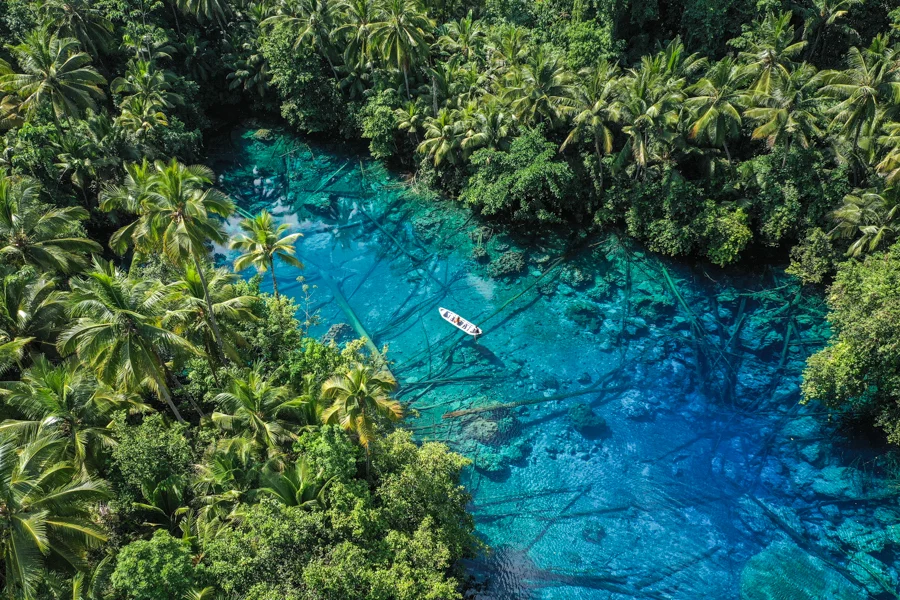
The lake lies on Peleng Island near Luk Panenteng in North Bulagi District. Its water is remarkably clear, with blue-green tones that can make boats and submerged tree trunks appear suspended above the lakebed.
The lake is relatively small, covering around 1.2 hectares, with reported depths of roughly 5 to 15 metres.
Visitors can swim, snorkel, or explore by small boat or canoe. Local boat operators may also be available to take visitors across the lake.
The nearby Paisubatango Lagoon makes it possible to combine two clear-water attractions during the same outing.
For the clearest experience, early morning is generally the preferred time to visit. Water clarity can still vary with rainfall and seasonal conditions, so local advice remains useful.
For more detailed planning, see our Paisupok Lake guide.
Getting to Paisupok
For many international travellers, the journey to Paisupok is part of the experience.
From Luwuk, you first need to reach the port used for boats to Peleng. The wooden passenger service from Pelabuhan Rakyat to Leme Leme takes roughly two hours under typical conditions.
From Leme Leme, Paisupok is around 23 kilometres away. The road can be slow, and the final journey may take close to an hour depending on conditions.
Scooters and cars can be arranged locally, including through accommodation providers.
The important point is to leave room for changes. Boat times, road conditions, sea conditions, and local transport do not always operate like a fixed timetable in a major tourist destination.
Beyond Paisupok: What Else Can You See?
Banggai is much larger than one lake.
Peleng Island is only one part of the wider Banggai archipelago, and travellers with additional time can explore beaches, waterfalls, reefs, villages, and other islands.
Poganda Beach
Poganda Beach is near Luk Panenteng on the northern coast of Peleng.
The beach combines white sand and calm water, with opportunities for swimming and snorkelling directly from shore. Because it is close to Paisupok, the two are often combined into a single day of exploration.
Pulo Dua Balantak
Pulo Dua, in North Balantak District, is accessible from the Luwuk side by road and boat.
Its landscape combines green hills, clear water, and white-sand beaches. Visitors can snorkel, dive, swim, or climb the hills for wider views.
Banggai Laut and Banggai Island
Travellers with more time can continue towards Banggai Laut Regency.
This area offers a different island atmosphere, with longer stretches of quiet coast, reefs, villages, and simpler accommodation. Long Beach and Tanjung Gundul are among the places worth researching when planning a longer route.
Waterfalls Around Luwuk
You do not need to leave the mainland to see nature.
Salodik Waterfall, Kamumu Waterfall, and Piala Waterfall can be combined with time in Luwuk before or after an island trip.
Kamumu requires more travel and a jungle hike, while Piala and Salodik are more accessible as mainland excursions.
For another nearby attraction, see the Piala Waterfall guide.
Diving and Snorkelling in Banggai
The marine environment is one of the strongest reasons to travel beyond the main tourist routes.
The Banggai archipelago contains coral reefs, shallow snorkelling areas, deeper dive sites, and habitat associated with the endemic Banggai Cardinalfish.
Some locations are remote, so visitors should not assume that fully equipped equipment rentals or professional dive support will always be available.
For diving, especially in less familiar areas, it is safer and more practical to arrange a certified guide or established operator.
Travellers who prefer independent exploration should check local sea conditions before entering the water.
Getting There Through Luwuk
Luwuk is the practical gateway for much of a Banggai trip.
Syukuran Aminuddin Amir Airport (LUW) serves the city, with domestic connections through Indonesian aviation hubs. Travellers coming from Australia will commonly need to connect through a larger Indonesian city before continuing to Luwuk.
From Luwuk, the trip changes from air travel to road and sea travel.
This is one of the biggest differences between Banggai and destinations such as Bali.
In Bali, transport can often be booked quickly through established tourist services. In Banggai, some parts of the journey may require a local driver, port coordination, boat arrangements, or help from accommodation providers.
That makes the destination more demanding, but it also creates a stronger sense of travelling through a real working region rather than a fully packaged tourism zone.
The Two Main Boat Departure Points in Luwuk
One practical detail is particularly important for first-time visitors.
Luwuk has different departure points for different boat routes.
Pelabuhan Rakyat is associated with passenger boats travelling to Leme Leme on Peleng Island.
The ASDP ferry terminal handles larger roll-on, roll-off ferries and is more relevant for travellers taking vehicles or continuing towards Banggai Laut.
They are not interchangeable, so confirm the port name before leaving your hotel or airport.
Travel Considerations for Australian Visitors
For Australian travellers, the most important preparation is not simply booking a flight.
It is building flexibility into the itinerary.
Flights
Flight routes and schedules can change, particularly on regional routes. Confirm current schedules before booking connecting ferries or tours.
Visas
Visa and entry requirements can change. Check the latest information from Indonesian immigration authorities or your airline before departure.
Cash
Bring enough Indonesian rupiah for the islands.
Luwuk has banks and ATMs, but smaller islands may have limited or unreliable access to cash services.
Accommodation
Luwuk offers a broader selection of hotels and guesthouses. Outside the main towns, accommodation is more basic and limited.
For popular travel periods, booking ahead is sensible.
Weather
Sea conditions matter.
The drier months generally offer more favourable conditions, while wetter periods can affect roads, boats, and travel schedules.
Never rely on an old ferry timetable without checking locally.
How Banggai Compares With Other Bali Alternatives
Banggai is not the only Indonesian destination for travellers searching for an alternative to Bali.
The right destination depends on what you value most.
Sumba
Sumba offers strong cultural experiences, traditional villages, weaving traditions, open landscapes, and savanna.
It is more accessible than Banggai and has a growing tourism network.
For travellers who want culture and landscapes without the same level of logistical difficulty, Sumba may be easier to organise.
Flores and Komodo
Flores and Komodo have a much more established international tourism industry.
Labuan Bajo provides more accommodation and tour options, while Komodo offers marine experiences and the famous Komodo dragons.
The trade-off is a busier tourism environment than many parts of Banggai.
Raja Ampat
Raja Ampat is particularly attractive to divers and marine-life enthusiasts.
The region is remote and highly regarded for marine biodiversity, but travel can be expensive and more logistically demanding.
Banggai provides another option for travellers who want remote islands and marine experiences without building the entire trip around resort or liveaboard travel.
Togian Islands
The Togian Islands provide another Central Sulawesi island experience, with stilt villages, wooden bridges, beaches, and snorkelling.
They are quieter than Bali but have a different access route and a more established backpacker presence than some parts of Banggai.
Who Is Banggai Best Suited To?
Banggai is particularly suitable for travellers who are comfortable with:
- basic infrastructure
- longer road and boat journeys
- changing schedules
- local transport arrangements
- simple accommodation
- spending more time outdoors than in developed tourist facilities
It may be less suitable for travellers who expect constant Wi-Fi, luxury resorts, predictable transport, or a large choice of international restaurants.
That distinction is worth understanding before booking.
The best Bali alternatives are not necessarily places that reproduce Bali somewhere else. They are destinations that offer something different.
Banggai’s difference is its combination of clear-water landscapes, islands, reefs, waterfalls, local communities, and a relatively low level of international tourism.
Planning a Banggai Trip From Luwuk
A practical Banggai itinerary can start with one or two nights in Luwuk, followed by island travel.
Depending on the amount of time available, you can combine mainland waterfalls with Peleng, Paisupok, Poganda, Banggai Laut, or other island destinations.
Travellers who prefer to manage transport themselves can organise the journey locally, but those who want a more predictable experience may prefer to arrange transport, accommodation, boats, and guides in advance.
For travellers who prefer local logistical support, see our Banggai tour packages or explore our Banggai private tour options.
Final Thoughts
Bali remains one of Indonesia’s major destinations, but travellers do not have to choose between Bali and staying home.
There are many alternatives across Indonesia, and Banggai is one of them.
What makes Banggai different is not luxury or convenience. It is the combination of clear lakes, quiet beaches, coral reefs, waterfalls, islands, and local life, together with the feeling that the destination has not yet been built entirely around international tourism.
For travellers who have already explored Bali and want a quieter side of Indonesia, Banggai offers a very different next chapter.